
Does On Grid Solar Work During Power Cut? Kerala Homeowner Guide
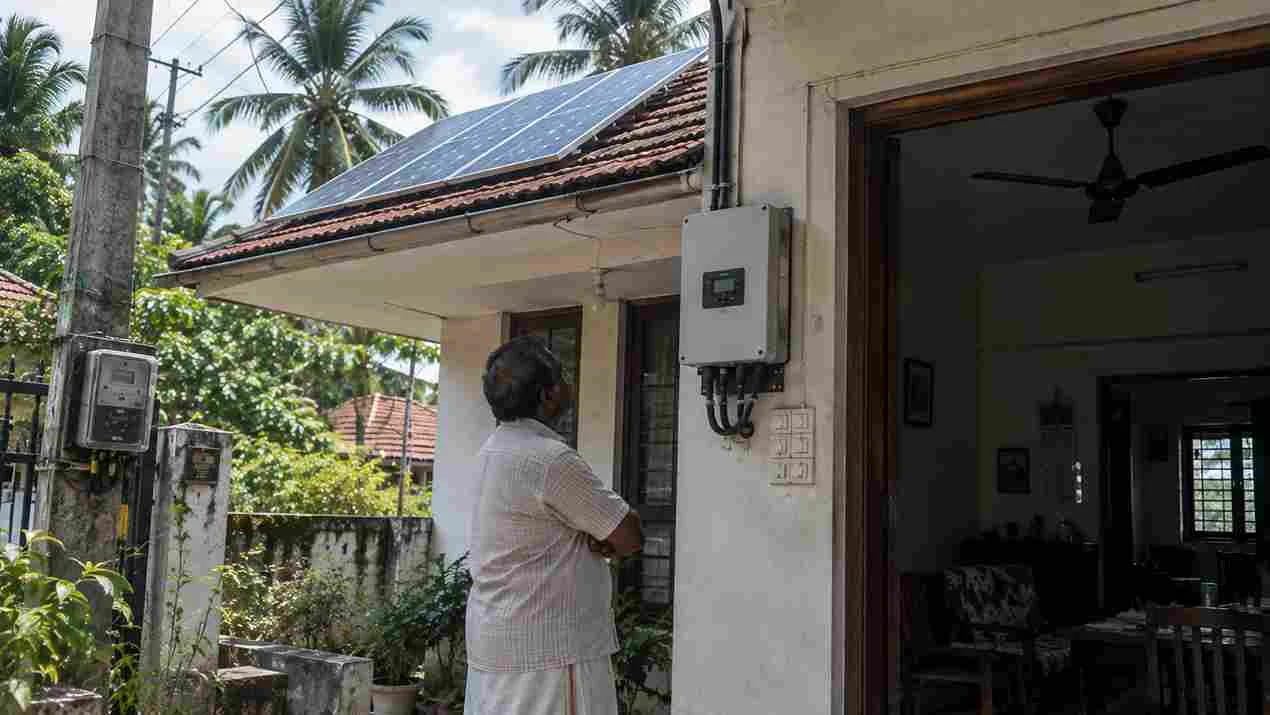
Does on grid solar work during power cut? This is a common question among Kerala homeowners planning to install a rooftop solar system.
Will my solar system continue powering my home when KSEB electricity goes off?
For a standard on-grid solar system, the answer is no.
Even when the sun is shining and the solar panels are capable of generating electricity, a conventional grid-connected inverter is designed to stop supplying power when the utility grid goes down.
This is not a defect or limitation caused by poor-quality solar panels. It is an important electrical safety feature known as anti-islanding protection.
Understanding this difference before choosing between an on-grid, hybrid or off-grid solar system can help homeowners avoid one of the most common misunderstandings about rooftop solar.
Does On Grid Solar Work During Power Cut?
If you are wondering does on grid solar work during power cut, the answer is no for a standard grid-connected system. A standard on-grid solar system does not normally provide electricity to your home when the utility grid goes down.
Under normal operating conditions, your rooftop solar panels generate DC electricity. The solar inverter converts this electricity into AC power that can be used within the property while the solar installation remains connected to the utility grid.
When the grid supply becomes unavailable, the inverter detects the loss of acceptable grid conditions and stops normal grid-connected operation.
This means your home can experience a power cut even though:
- It is daytime
- The sun is shining
- Solar panels are installed on the roof
- The panels could otherwise be generating electricity
The key point is simple:
Solar generation and power backup are not the same thing.For homeowners searching whether on-grid solar works during a power cut, the deciding factor is whether the system has been specifically designed with backup capability.
If you require electricity during grid outages, backup capability must be considered as part of the solar system design.
Why Does On-Grid Solar Shut Down During a Power Cut?
The main reason is electrical safety.
Consider a situation in which KSEB switches off electricity on a distribution line so technicians can inspect, maintain or repair the network.
If rooftop solar systems connected to that line continued feeding electricity into it, parts of the network expected to be de-energised could remain electrically live.
That could create a serious safety risk for utility personnel.
For this reason, grid-connected solar inverters incorporate protection that detects abnormal or unavailable grid conditions and stops feeding electricity into the connected network.
This safety function is known as anti-islanding protection.
So, when an on-grid inverter stops operating during a power cut, the system is generally behaving exactly as a properly protected grid-connected solar system is designed to behave.
What Is Anti-Islanding in a Solar System?
Anti-islanding sounds highly technical, but the concept is straightforward.
An unintended electrical island can occur when one part of the electricity network becomes disconnected from the main utility supply but continues receiving electricity from another local generating source.
A rooftop solar installation is one example of such a generating source.
Anti-islanding protection helps prevent a standard grid-connected inverter from continuing to energise an isolated section of the electricity network.
Grid-connected solar installations in India are subject to applicable technical connectivity and safety requirements, including requirements issued by the Central Electricity Authority (CEA).
A Simple Example
During normal operation:
Solar Panels → On-Grid Inverter → Home Loads + Electricity Grid
Now imagine that KSEB supply fails.
The inverter detects that acceptable grid conditions are no longer available.
Its protection system responds, and the standard grid-connected output stops.
This prevents the solar installation from unintentionally feeding electricity into a network that is supposed to be de-energised.
What Happens to Your Solar System When KSEB Power Goes Off?
The process becomes easier to understand when we look at normal operation and outage conditions separately.
Kerala homeowners can refer to KSEB’s official Solar Rooftop Portal for information related to grid-connected rooftop solar installations and procedures in Kerala.
When KSEB Grid Supply Is Available
During normal daytime operation:
- Solar panels receive sunlight.
- The panels generate DC electricity.
- The solar inverter converts DC electricity into usable AC electricity.
- Your home consumes available solar-generated power.
- Depending on the approved system and applicable metering arrangement, electricity may also be exchanged with the grid.
When KSEB Grid Supply Fails
During a power outage:
- The utility grid becomes unavailable or moves outside permitted operating conditions.
- The grid-connected inverter detects the change.
- Anti-islanding protection operates.
- Standard on-grid output stops.
- Household circuits relying on that normal grid-connected supply also lose power.
This can happen even in the middle of a sunny day.
When Grid Supply Returns
Once acceptable grid conditions have been restored, the inverter can return to normal grid-connected operation according to its protection logic and operating requirements.
The exact reconnection behaviour can vary depending on the inverter and system configuration.
If Solar Panels Are Generating Electricity, Why Can’t My Home Use It?
This is where many homeowners become confused.
The problem is not simply the absence of sunlight.
The solar panels may still have solar energy available.
The issue is that a conventional on-grid solar inverter is designed to operate in coordination with the utility grid.
When that grid reference disappears, the inverter must safely disconnect instead of creating an independent electrical supply.
In other words:
Solar panels alone do not create a backup power system.
For your home to continue operating during an outage, the electrical system must be designed specifically for backup operation and must safely isolate the backup supply from the utility network.
Does On Grid Solar Work During Power Cut Without Battery Backup?
A standard on-grid solar system does not normally provide backup during a power cut. However, certain specifically designed solar systems may provide limited backup capability without conventional battery storage, depending on the inverter and overall system architecture.
There are several approaches depending on your electricity requirements.
Option 1: Hybrid Solar System With Battery Backup
A properly designed hybrid solar system can combine:
- Solar panels
- A compatible hybrid inverter
- Battery storage
- Required protection equipment
- Appropriate switching and isolation
- Dedicated backup loads or circuits
During normal grid conditions, the system can operate with solar generation and the electricity grid.
During an outage, a correctly designed backup-capable system can isolate the relevant part of the installation from the utility network and continue supplying selected loads using available solar energy and/or stored battery energy.
However, an important distinction must be made:
Not every system marketed as a “hybrid solar system” automatically provides complete whole-house backup.
Backup performance depends on:
- Inverter capability
- Battery capacity
- Battery discharge capacity
- Electrical design
- Backup output
- Switching arrangement
- Connected appliance loads
- Required backup duration
The system must therefore be designed around the homeowner’s actual requirements.
Option 2: Back Up Only Essential Loads
Many Kerala homes do not need every appliance to remain operational during a power cut.
Instead, a backup system can be designed to support essential loads such as:
- Lights
- Fans
- Wi-Fi router
- Refrigerator
- CCTV or security equipment
- Selected sockets
- Essential communication devices
This can be more practical than trying to operate the entire house from battery storage.
High-power appliances such as:
- Air conditioners
- Water heaters
- Large pumps
- Electric cooking appliances
can significantly increase inverter and battery requirements.
For this reason, homeowners should first decide:
Which appliances must remain operational during an outage?
and
How long should they continue running?
These two questions are fundamental to backup-system sizing.
Option 3: Off-Grid Solar System
An off-grid solar system is designed to operate independently of the utility grid.
Such systems generally use:
- Solar panels
- Battery storage
- An inverter/controller
- Appropriate electrical protection
Off-grid solar can be suitable for locations where utility electricity is unavailable, highly unreliable or where complete independence from the grid is required.
However, off-grid solar should not automatically be considered the best solution for every Kerala homeowner who experiences occasional power cuts.
Where a KSEB connection is available, homeowners should compare on-grid, hybrid and off-grid solutions based on their actual requirements.
On-Grid vs Hybrid vs Off-Grid Solar During a Power Cut
| Feature | Standard On-Grid | Backup-Capable Hybrid + Battery | Off-Grid |
|---|---|---|---|
| Uses solar energy | Yes | Yes | Yes |
| Connected to utility grid | Yes | Yes | Normally designed for independent operation |
| Battery required for normal operation | No | Used for storage/backup | Generally yes |
| Provides standard backup during grid outage | No | Can, when correctly designed | Designed for independent operation |
| System complexity | Lower | Higher | Higher |
| Suitable mainly for bill reduction | Yes | Can provide savings plus backup | Depends on application |
| Suitable when outage backup is important | Not by itself | Often suitable | Suitable for specific use cases |
There is no universal winner.
Each system type solves a different problem.
On-Grid or Hybrid Solar: Which Is Better for a Kerala Home?
The right choice depends on what you expect your solar system to achieve.
On-Grid Solar May Be Suitable If:
- Your main objective is reducing electricity bills
- KSEB supply at your property is generally reliable
- Backup during power cuts is not essential
- You do not currently require battery storage
- You prefer a comparatively simpler rooftop solar system
For many homes, a properly designed on-grid solar system in Kerala can be an effective solution for reducing dependence on grid electricity during normal operating conditions.
Hybrid Solar May Be Worth Considering If:
- Power outages significantly affect your household
- You work from home and require continuity
- Refrigeration needs to remain operational
- CCTV or security systems require uninterrupted power
- Essential household or medical equipment needs backup
- You want battery storage for use when solar generation is unavailable
A hybrid solar system can offer greater flexibility, but the battery and backup architecture must be designed according to the required loads.
Can a Hybrid Solar System Power the Entire House During a Power Cut?
Potentially, yes—but it depends entirely on system sizing and electrical design.
Whole-house backup can require significantly more inverter and battery capacity than essential-load backup.
The designer must consider:
- Total connected load
- Inverter output capacity
- Battery capacity
- Battery discharge capability
- Starting current of appliances
- Solar generation available at the time
- Required backup duration
For example, supplying:
4 fans + lights + Wi-Fi + refrigerator
is very different from supplying:
multiple air conditioners + water heater + pumps + kitchen appliances.
This is why the phrase “whole-house backup” should never be treated as a standard feature without proper load calculations.
Can You Add a Battery to an Existing On-Grid Solar System?
In some cases, yes.
However, upgrading an existing on-grid solar system for backup is not necessarily as simple as connecting a battery to the existing inverter.
Whether an upgrade is possible depends on factors such as:
- Existing inverter type
- Battery compatibility
- Current electrical architecture
- Desired backup loads
- Protection requirements
- Switching and isolation arrangements
- Proposed storage configuration
Depending on the installation, the upgrade may require:
- A compatible hybrid or storage solution
- Additional electrical equipment
- Dedicated backup circuits
- Electrical reconfiguration
- Changes to protection and isolation arrangements
An existing installation should therefore be technically evaluated before selecting a battery-backup solution.
Does Net Metering Give You Power During a Power Cut?
No.
Net metering and power backup perform completely different functions.
Net metering is related to measuring electricity exchanged between an eligible grid-connected solar installation and the electricity grid under the applicable arrangement.
It does not convert an ordinary on-grid system into a backup system.
A homeowner can therefore have:
- Rooftop solar
- A grid-connected inverter
- Net metering
and still experience a complete power interruption when the KSEB grid goes down.
If backup is required, it must be incorporated separately into the system design.
What Should You Consider Before Choosing Solar Battery Backup?
Before investing in battery-backed solar, consider the following questions.
How Frequently Do You Experience Power Cuts?
If grid outages are rare and very short, battery storage may not be necessary purely for backup.
If outages are frequent or cause significant disruption, backup capability may be more valuable.
Which Appliances Need to Continue Running?
Prepare an essential-load list.
For example:
- 4 fans
- 6 lights
- Refrigerator
- Wi-Fi router
- CCTV system
This makes system sizing far more accurate than simply asking for “backup for my house.”
How Many Hours of Backup Do You Need?
A battery designed for one hour of essential-load backup is very different from a system expected to provide several hours of backup.
Do You Need Backup at Night?
At night there is no solar generation.
Therefore, nighttime backup depends primarily on stored battery energy or another available backup source.
Will Your Electricity Requirement Increase?
Consider future additions such as:
- Air conditioners
- Electric vehicle charging
- Additional rooms
- Pumps
- Home-office equipment
- Additional appliances
Planning ahead can reduce the risk of undersizing the system.
Do You Really Need Whole-House Backup?
For many households, essential-load backup can provide a better balance between practicality, battery size and system cost.
Why Professional Solar System Design Matters
Selecting a rooftop solar system should involve more than choosing the number of panels or comparing inverter capacities.
A properly planned installation should consider:
- Current electricity consumption
- Daytime consumption pattern
- Existing electrical loads
- Required solar capacity
- Available usable roof area
- Roof orientation and shading
- Grid connection requirements
- Inverter selection
- Electrical protection
- Battery requirements, if applicable
- Backup duration
- Future electricity demand
This becomes especially important when the homeowner expects the solar system to provide both:
electricity savings and power backup.
The correct system architecture should be determined before equipment is purchased.
Frequently Asked Questions
Does on grid solar work during a power cut in Kerala?
No. A standard on-grid solar system normally stops supplying household power when the utility grid becomes unavailable. The grid-connected inverter detects the loss of acceptable grid conditions and stops normal grid-connected output through its anti-islanding protection.
Why does my solar inverter switch off during a power cut?
The inverter switches off or disconnects because a standard grid-connected solar system includes anti-islanding protection. This helps prevent the solar installation from unintentionally energising electricity lines when the grid supply is unavailable.
Do solar panels stop generating electricity during a power cut?
The panels may still receive sunlight and have solar energy available. However, a conventional grid-connected inverter stops supplying normal usable AC power into the grid-connected system during the outage.
Can I use solar power during a power cut without a battery?
A conventional on-grid solar installation does not normally provide outage backup. Some specialised system architectures may offer certain backup capabilities, but these must be specifically supported by the inverter and overall electrical design.
Can I add a battery to my existing on-grid solar system?
It may be possible, depending on the existing inverter and system architecture. Additional equipment, a compatible storage solution or electrical changes may be required.
Is hybrid solar better than on-grid solar?
Neither is universally better. On-grid solar is often suitable when electricity-bill reduction is the primary goal. A backup-capable hybrid system may be more appropriate when battery storage and power continuity during outages are important.
Can a hybrid solar system run my entire house during an outage?
It can be designed to do so in some cases, but inverter capacity, battery capacity, appliance loads and required backup duration must all be calculated. Essential-load backup may be more practical for many homes.
Does net metering provide power backup?
No. Net metering measures electricity exchanged with the grid. It does not itself provide backup electricity during a grid outage.
Choose the Solar System Based on Your Actual Requirement
A standard on-grid solar system can be an effective choice when your primary objective is reducing electricity costs and grid outages are not a significant concern.
If power continuity during KSEB outages is important, backup capability should be considered before the system is installed.
Depending on the requirement, this may involve:
- A backup-capable hybrid inverter
- Battery storage
- Essential-load circuits
- Appropriate electrical protection
- Safe switching and isolation arrangements
Before choosing the system, ask four simple questions:
How much electricity does your property consume?
Which appliances must remain operational during a power cut?
How many hours of backup do you need?
What solar and battery configuration can safely meet those requirements?
Rumion Power India provides rooftop solar solutions for residential, commercial, industrial and agricultural applications in Kerala, including site assessment, engineering, installation, applicable subsidy and net-metering assistance, commissioning and long-term support.
Need Solar Backup During KSEB Power Cuts?
Not sure whether your property needs an on-grid, hybrid or off-grid solar system?
A proper assessment of your electricity consumption, essential loads, rooftop conditions and backup requirements can help determine the right solar configuration.