Agrivoltaics in India reframes farmland as a multi-yield asset. Instead of allocating land to a single output, it enables the simultaneous production of crops and clean electricity through elevated solar installations. This change addresses a structural constraint. Land costs are rising, input costs are volatile, and single-income farming models are increasingly exposed to climate risk. At the same time, India’s renewable energy targets are expanding the value of distributed generation. The convergence is strategic. Solar farming India is no longer just an energy initiative; it is a farm income stabilisation model. Execution matters here. Rumion Power India acts as the execution partner that converts agrivoltaic concepts into fully operational, income-producing assets on working farmland.
What is Agrivoltaics and How It Works in India
At its core, agrivoltaics is a layered land-use system.
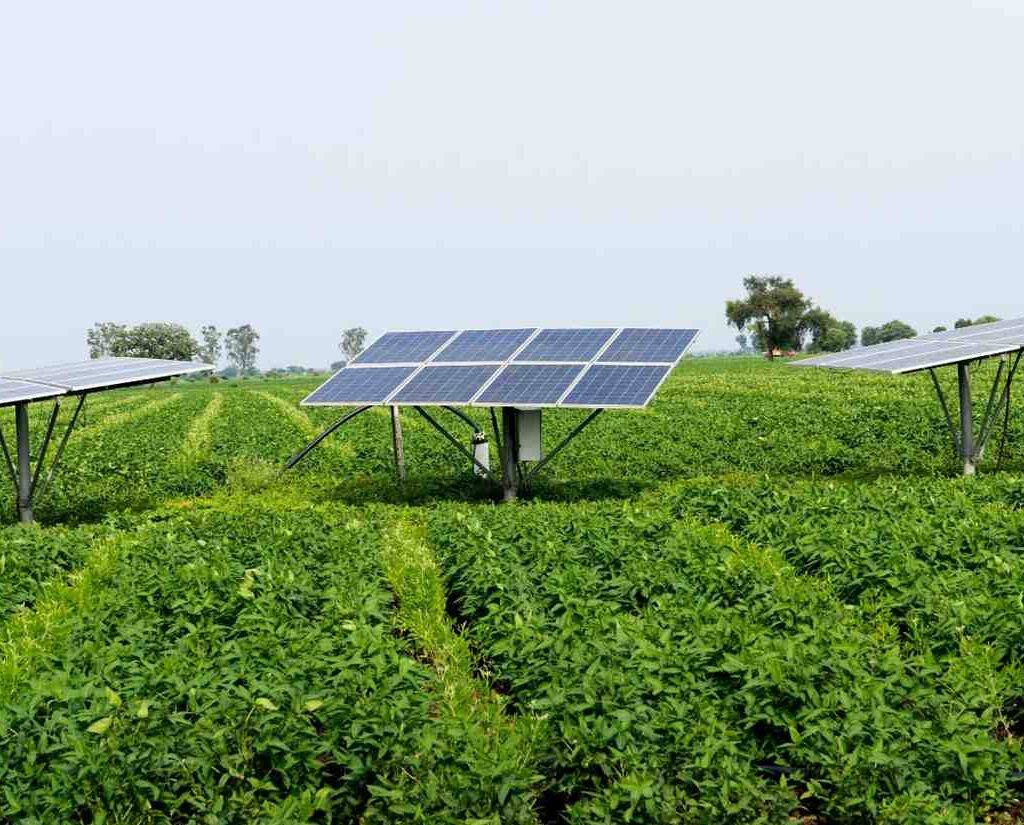
Solar modules are mounted on elevated structures engineered to maintain agricultural usability below. Clearance height, row spacing, and structural alignment are calibrated to allow uninterrupted movement of labour, machinery, and irrigation systems.
Two dominant system logics are applied:
● Static configurations optimize for consistent generation output.
● Dynamic tracking systems adjust panel angles to balance irradiance between energy capture and crop exposure.
The critical operational layer is the microclimate created beneath the panels. Partial shading reduces thermal stress, moderates soil temperature, and slows evapotranspiration. This transforms what appears to be a constraint into an agronomic advantage under high-radiation conditions common across India.
Why Agrivoltaics is Gaining Attention in India
Agrivoltaics is gaining traction as multiple pressures converge. Rural energy demand is rising with mechanisation and irrigation, while unpredictable rainfall is making farm income unstable. This model adds a steady and non-seasonal revenue stream through solar power, which is not dependent on the monsoon. At the grid level, decentralised solar reduces transmission losses and strengthens local supply. DISCOMs are increasingly supporting distributed generation, making farmland more valuable as both a production asset and an energy source.
Dual Income Model – How Farmers Earn from Agrivoltaics
The financial architecture of agrivoltaics is multi-layered.
● Power Monetisation
Electricity generated can be exported through net metering or long-term power purchase agreements. This creates annuity-style income with defined tariffs.
● Land Yield Optimisation
Instead of idle or single-use land, the same acreage generates agricultural and energy outputs concurrently, increasing revenue density per unit area.
● Operational Cost Compression
On-site generation offsets electricity expenses for irrigation, storage, and processing. This directly improves farm-level margins.
● Leasing Structures
In developer-led models, landowners can lease space for solar deployment, converting capital expenditure into fixed rental income.
The combined effect is cash flow smoothing. Seasonal agricultural income is complemented by consistent monthly energy revenue, making dual land use solar India a practical way to reduce financial volatility.
Suitable Crops for Agrivoltaic Farming in India
Crop compatibility is a function of light tolerance and heat sensitivity.
High compatibility segments include:
● Leafy vegetables with low direct radiation requirements
● Rhizome crops such as turmeric and ginger
● Medicinal and aromatic plants
● Fodder crops and certain legumes
These crops perform well under diffused light, and partial shading in hot regions helps reduce heat stress. It also improves water efficiency by lowering evaporation, cutting irrigation needs. With the right crop choice, this becomes an optimisation, not a trade-off.
Land Requirements and System Design Considerations
Agrivoltaic viability is design-dependent.
● Scale Efficiency
While small installations are possible, economies of scale improve significantly with larger land parcels due to fixed infrastructure and grid connectivity costs.
● Functional Layout
Row spacing and structural height must align with existing farming practices. Poorly planned layouts disrupt operations and reduce usability.
● Energy-Agriculture Trade-off Calibration
Panel orientation and tilt are not purely energy-driven decisions. They must be aligned with crop light requirements to avoid yield suppression.
This is where engineering intersects with agriculture. A purely solar-optimised design approach is insufficient for long-term success.
Cost of Agrivoltaics in India
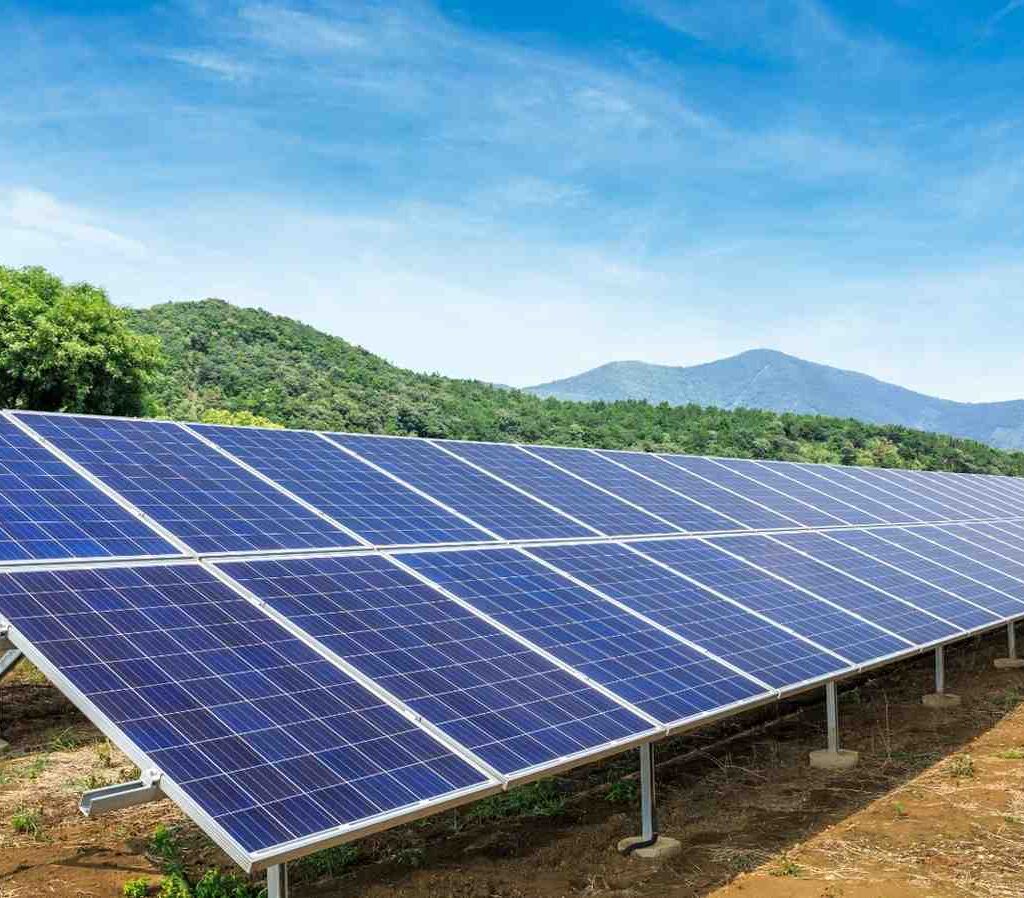
Agrivoltaic systems carry a structural cost premium. Elevated mounting systems require stronger materials, deeper foundations, and more complex installation processes compared to conventional ground-mounted solar.
However, the return profile offsets this, especially with the growing adoption of solar panels for agriculture India.
● Payback period typically falls within 5 to 7 years
● Asset life extends beyond 25 years
When evaluated as a dual-income infrastructure asset rather than a single-output system, the investment case becomes significantly stronger.
Government Policies and Subsidies for Agrivoltaics
Policy frameworks are evolving to support this hybrid model. The PM-KUSUM scheme is central to this transition. It enables farmers to deploy solar infrastructure with financial assistance while retaining ownership of generated power. In parallel, institutions like NABARD provide access to structured financing through subsidised credit lines. State-level policies, particularly in southern regions, are increasingly aligned with decentralised solar adoption. The opportunity exists, but execution requires navigation of approvals, subsidies, and financing structures with precision.
Challenges in Agrivoltaics Adoption
Adoption barriers are real and should be evaluated upfront.
● Capital Intensity
Initial investment remains higher than standard solar or traditional farming setups.
● Maintenance Discipline
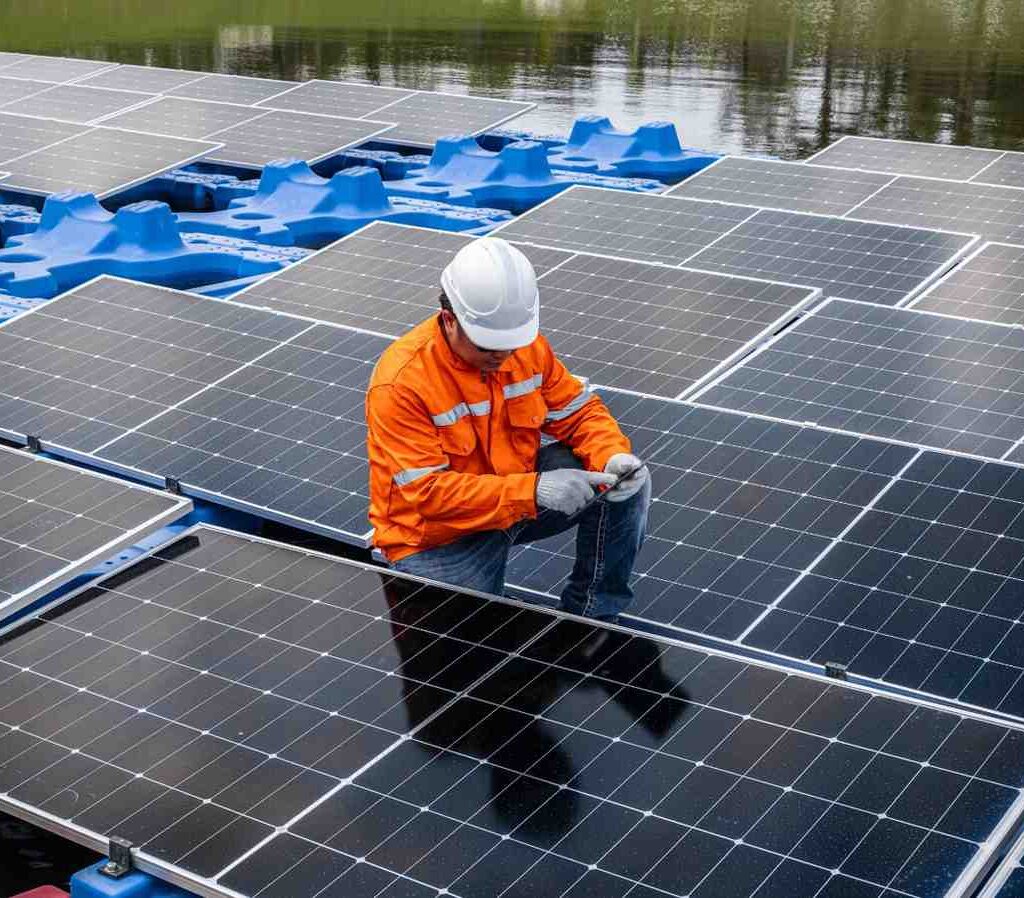
Panel efficiency is sensitive to dust accumulation. Agricultural environments require consistent cleaning protocols.
● Operational Integration
Managing energy production alongside farming introduces a new layer of complexity. Skill adaptation is required.
These are execution challenges, not structural flaws. With the right system design and support, they can be mitigated effectively.
Agrivoltaics vs. Traditional Solar Farms
Traditional solar deployment often results in land-use displacement. Agricultural activity is typically halted.
Agrivoltaics avoids this trade-off.
● Land remains agriculturally productive
● Energy generation runs in parallel
● Community-level farming continuity is preserved
From a metrics perspective, revenue per acre increases without reducing land utility. This makes agrivoltaics a higher-efficiency land-use model in both economic and social terms.
Environmental and Agricultural Benefits
The environmental value extends beyond renewable energy generation.
● Thermal Regulation
Panel shading reduces extreme temperature exposure, improving crop resilience.
● Water Efficiency
Lower evaporation rates lead to sustained soil moisture and reduced irrigation demand.
● Carbon Reduction
On-site clean energy generation reduces dependency on fossil-fuel-based electricity inputs in agriculture.
This creates a system where productivity and sustainability reinforce each other.
Role of Rumion Power India in Agrivoltaics Projects
Rumion Power India operates across the full project lifecycle.
The approach integrates:
● Feasibility assessment aligned with land and crop profiles
● Custom system design balancing energy and agricultural outputs
● Support for subsidy access and regulatory approvals
● Execution using structures engineered for local environmental conditions
Post-installation, service capability becomes critical in Solar farming India. Consistent maintenance ensures system efficiency, especially in dust-prone agricultural zones. For landowners in Kerala, strong local execution reduces operational risk and improves long-term system reliability.
Conclusion: A Smarter Way to Farm
Agrivoltaics in India represents a change from single-output agriculture to integrated asset utilisation. It converts farmland into a dual-revenue platform, combining predictable energy income with ongoing agricultural production. In an environment defined by climate uncertainty and rising input costs, this model offers stability, scalability, and long-term value. With experienced execution partners like Rumion Power India, the transition from concept to implementation becomes structured and commercially viable. Your land can already do more. The real question is how soon you decide to put it to full use.
Read More – Understanding Electricity Bill and Financial Savings Through Solar Installation